


 Oct 12, 2026
 View:42
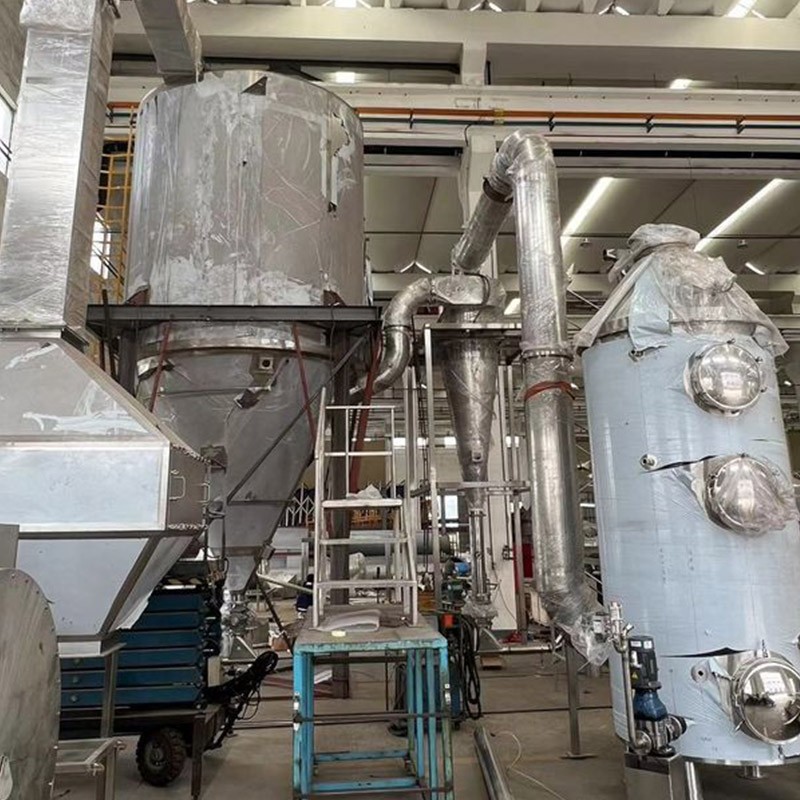
However, selecting an industrial spray dryer involves more than comparing equipment prices or nominal capacities. Atomization technology, drying temperature, evaporation rate, powder collection efficiency, heating systems, and cleaning requirements all influence the final equipment configuration.
This guide explains how to choose an industrial spray dryer for powder production, what technical parameters to evaluate, and which questions to ask before requesting a quotation from a spray dryer supplier.
Quick Answer: How Do You Choose an Industrial Spray Dryer?
Start by defining your feed material properties, target powder specifications, and required production output. Then evaluate the atomization method, water evaporation capacity, drying temperature, heating source, powder collection system, material compatibility, and safety requirements. Before purchasing, confirm the proposed configuration through material testing, technical review, and a detailed supplier quotation.
1. Define Your Material Characteristics and Powder Requirements
The first step in selecting an industrial spray dryer is understanding the material being processed and the characteristics required in the final powder. Different feed materials behave differently during atomization and drying, so equipment selection should begin with process requirements rather than a standard machine specification.
Evaluate Feed Material Properties
Before selecting a spray dryer, collect the following information about your feed material:
Material type: Determine whether the feed is a solution, emulsion, suspension, slurry, or another pumpable liquid.
Solid content: Measure the concentration of solids in the feed because it directly affects the required evaporation capacity.
Viscosity: Evaluate how easily the material can be pumped and atomized under the intended operating conditions.
Thermal sensitivity: Identify components that may degrade, oxidize, or lose activity during exposure to heat.
Corrosiveness and solvent properties: Determine whether special contact materials, solvent recovery, or additional safety measures are required.
For example, a liquid feed containing a high concentration of dissolved solids may require a different atomization configuration from a low-viscosity solution. Materials that are sensitive to heat may also require careful control of outlet temperature and residence time.
Define the Final Powder Specifications
The desired powder properties should be established before choosing the equipment. Important specifications include:
Final moisture content and water activity, where relevant
Target particle size and particle size distribution
Bulk density and flowability
Solubility, dispersibility, and reconstitution performance
Color, flavor, chemical stability, or active ingredient retention, where applicable
Powder recovery rate and acceptable product loss
These requirements influence atomizer selection, drying conditions, chamber design, and powder collection equipment. A suitable industrial spray dryer should be evaluated against measurable product specifications rather than equipment capacity alone.
2. Choose the Right Spray Dryer Atomization System
Atomization converts liquid feed into small droplets, increasing the surface area available for moisture evaporation. The atomization system influences droplet size, drying behavior, particle morphology, and the overall performance of the spray drying process.
Two commonly used approaches are centrifugal atomization and pressure nozzle atomization. The most suitable option depends on feed properties, production requirements, maintenance preferences, and the desired powder characteristics.
Centrifugal Atomization
A centrifugal spray dryer uses a high-speed rotating atomizer to distribute the liquid feed into droplets. This configuration can be suitable for continuous industrial production and a range of liquid feed materials.
When evaluating a centrifugal spray dryer, consider:
Atomizer speed and its influence on droplet formation
Feed viscosity and the stability of liquid distribution
Required throughput and operating flexibility
Atomizer maintenance, wear parts, and cleaning access
Target particle size distribution and powder recovery
Centrifugal atomization may be appropriate when production flexibility and stable continuous operation are important. However, actual performance must be verified with the intended material and operating conditions.
Pressure Nozzle Atomization
A pressure nozzle spray dryer forces liquid feed through a specially designed nozzle under pressure. The resulting spray pattern and droplet distribution depend on nozzle geometry, feed pressure, liquid properties, and nozzle condition.
Important evaluation factors include:
Required feed pressure and pumping system capacity
Nozzle orifice size and compatibility with the feed material
Risk of nozzle blockage when processing suspensions or viscous feeds
Nozzle wear, replacement frequency, and maintenance costs
Desired droplet distribution and final powder characteristics
Pressure nozzle atomization can be a suitable option when the feed properties and target product specifications match the capabilities of the selected nozzle system.
How to Compare the Two Atomization Methods
| Selection Factor | Centrifugal Atomization | Pressure Nozzle Atomization |
|---|---|---|
| Droplet formation | Controlled by rotating atomizer conditions and feed properties | Controlled by nozzle design, feed pressure, and liquid properties |
| Key operating considerations | Rotating equipment maintenance and operating speed | Pump pressure, nozzle wear, and blockage risk |
| Feed compatibility | Must be verified against feed viscosity and atomizer requirements | Must be verified against nozzle passage size and feed properties |
| Final selection | Based on material testing, production targets, powder specifications, and operating costs | |
Neither atomization method is universally better. Request a technical recommendation based on your actual feed material, target particle size, and required output.
Explore Centrifugal Spray Dryers
3. Calculate the Required Drying Capacity
Capacity is one of the most important factors when choosing an industrial spray dryer. However, buyers should distinguish between feed capacity, finished powder output, and water evaporation capacity. These values describe different aspects of production and should not be used interchangeably.
Understand Powder Output and Evaporation Capacity
Feed capacity refers to the amount of liquid material entering the dryer per hour. Powder output refers to the amount of finished product collected per hour. Water evaporation capacity describes how much water the dryer can remove per hour under specified operating conditions.
For an initial mass balance, the following equations can be used when the feed contains water as the principal evaporated component and the nonvolatile solids are assumed to be fully retained.
Dry solids flow rate:
Dry Solids = F × (1 - Xi)
Theoretical powder output:
P = F × (1 - Xi) / (1 - Xf)
Theoretical water evaporation rate:
E = F - P
Where:
F = feed mass flow rate, in kg/h
Xi = initial feed moisture fraction on a wet basis
Xf = target final powder moisture fraction on a wet basis
P = theoretical finished powder output, in kg/h
E = theoretical water evaporation rate, in kg/h
Example: Estimate Spray Dryer Capacity
Suppose a production facility needs to process 100 kg/h of feed containing 50% water and produce powder with a final moisture content of 5%.
Feed rate: 100 kg/h
Initial moisture content: 50%
Target final moisture content: 5%
Dry solids: 100 × (1 - 0.50) = 50 kg/h
Theoretical powder output: 50 / (1 - 0.05) = 52.63 kg/h
Theoretical water evaporation rate: 100 - 52.63 = 47.37 kg/h
In this simplified example, the dryer must remove approximately 47.37 kg of water per hour to achieve the specified moisture content, assuming complete solids retention and no other material losses.
Actual powder output may differ because of collection losses, changes in product composition, operating conditions, and the performance of the downstream separation system. Engineering calculations should also account for the feed temperature, required thermal duty, air conditions, and heat losses.
What Affects the Required Capacity?
Several factors influence the capacity of an industrial spray drying system:
Feed rate and solids concentration
Initial and final moisture content
Inlet air conditions and allowable outlet temperature
Feed temperature and material thermal properties
Atomization quality and droplet size distribution
Required powder quality and product recovery rate
Operating hours, production schedule, and future capacity requirements
When comparing equipment quotations, confirm whether the quoted capacity refers to water evaporation or finished powder production. Ask suppliers to state the reference feed properties and operating conditions used to calculate their capacity figures.
4. Evaluate Drying Temperature and Powder Quality
Drying temperature is an important factor in spray dryer selection because it affects evaporation, product stability, residual moisture, and powder properties. The appropriate temperature settings depend on the material being processed and the required final product specifications.
Understand Inlet and Outlet Temperatures
The inlet temperature describes the temperature of the drying gas entering the drying chamber. The outlet temperature describes the temperature of the exhaust gas leaving the chamber. These values are related but are not interchangeable.
Inlet temperature influences the available heat for evaporation, while outlet temperature is also affected by feed rate, feed moisture, air flow, and the amount of water being evaporated. Both should be evaluated alongside product moisture and quality measurements.
For heat-sensitive materials, selecting a suitable operating window requires attention to the product's actual temperature exposure and residence time. A high inlet temperature does not automatically mean the powder reaches that same temperature throughout the drying process.
Control Particle Size and Moisture Content
Powder particle characteristics depend on multiple variables, including droplet size, feed concentration, drying rate, and the physical properties of the solids. Smaller droplets generally dry faster, but the final particle size and morphology also depend on material-specific behavior.
To achieve consistent powder quality, evaluate:
Target particle size distribution
Final moisture content and moisture uniformity
Bulk density and flow properties
Solubility and dispersibility, where relevant
Thermal degradation, oxidation, or loss of active components
Prevent Common Spray Drying Problems
Several common operating problems should be considered during equipment selection:
Wall sticking: May be associated with sticky material properties, unsuitable operating conditions, or inadequate chamber design.
Excessive residual moisture: May result from insufficient evaporation capacity, unstable feed conditions, or unsuitable operating settings.
Low powder recovery: May be linked to fine particles escaping collection, deposits in the chamber, or unsuitable separation equipment.
Particle size variation: May result from inconsistent atomization, changes in feed properties, or unstable process conditions.
The correct solution depends on the underlying cause. A supplier should evaluate the material properties and process data before recommending changes to the dryer configuration or operating parameters.
5. Select the Right Heating and Powder Collection Systems
An industrial spray dryer is more than a drying chamber. Its heating source, air handling equipment, powder separation system, feed system, controls, and safety features all contribute to overall performance.
Choose a Suitable Heating Source
Depending on the equipment design and site conditions, industrial spray dryers may use electric heating, steam-based heating, gas-fired heating, or other engineered heating arrangements.
When evaluating the heating system, consider:
Availability and cost of utilities at the installation site
Required inlet air temperature and thermal duty
Energy consumption at the expected operating load
Temperature control requirements
Local emissions, environmental, and safety requirements
Request estimated utility consumption under clearly stated production conditions. This makes it easier to compare operating costs between different equipment proposals.
Evaluate Powder Collection Efficiency
After drying, powder must be separated from the exhaust gas. Cyclone separators and bag filters are commonly used in industrial powder collection systems, depending on particle properties, collection requirements, and system design.
A cyclone separator uses centrifugal forces to separate particles from the gas stream. A bag filter captures particles as gas passes through filter media. Some systems use both technologies in sequence to improve overall powder recovery.
During selection, consider:
Expected particle size distribution
Required powder recovery and acceptable product loss
Exhaust air treatment requirements
Filter cleaning and replacement costs
Dust handling, operator exposure, and combustible dust risks
Confirm Construction Materials and Cleaning Requirements
Materials of construction should be selected according to feed chemistry, corrosion risks, hygiene requirements, cleaning procedures, and applicable industry standards.
For food and pharmaceutical applications, buyers may need to specify product-contact material grades, surface finish, cleanability, and documentation requirements. These details should be confirmed during the technical review rather than assumed from a general equipment description.
When Should You Consider a Closed-Loop Spray Dryer?
Closed-loop spray drying may be appropriate for certain materials that require controlled oxygen levels, solvent recovery, or specialized process containment. Such systems recirculate a drying gas within a designed process loop rather than relying solely on once-through air operation.
Before selecting a closed-loop system, evaluate the solvent properties, required inerting conditions, recovery objectives, gas circulation requirements, and applicable process safety measures. Flammable solvents and combustible powders require a qualified hazard assessment and appropriately engineered protective systems.
For projects involving specialized solvent-based materials, discuss the process conditions and safety requirements with an experienced engineering team before finalizing the equipment configuration.
Explore Industrial Spray Drying Equipment
6. Compare Spray Dryer Suppliers and Customization Options
Choosing the right industrial spray dryer supplier is as important as choosing the equipment itself. A suitable supplier should understand the material, production targets, operating environment, and final product specifications before recommending a machine.
Check Material Testing and Process Experience
Ask whether the supplier can support laboratory testing, pilot-scale trials, or other suitable process validation activities. Testing can help evaluate atomization behavior, drying conditions, powder quality, and collection performance before a full-scale investment.
For materials with unusual viscosity, thermal sensitivity, solvent characteristics, or strict quality requirements, material-specific testing may be particularly valuable.
Review Equipment Configuration and Technical Documentation
A detailed technical proposal should clearly identify the major equipment components, operating assumptions, and scope of supply.
Depending on the project, review:
Feed preparation, pumping, and atomization systems
Drying chamber dimensions and design conditions
Heating, air handling, and exhaust systems
Cyclone separators, bag filters, and powder discharge equipment
Instrumentation, control systems, and monitoring functions
Product-contact materials and cleaning provisions
Safety systems and applicable compliance documentation
Evaluate Total Cost of Ownership
The purchase price is only one part of the total investment. A more complete assessment should include energy consumption, maintenance, replacement parts, labor, cleaning, downtime, and expected product recovery.
When comparing quotations, confirm whether installation, commissioning, operator training, spare parts, transportation, and after-sales service are included. A lower initial price may not represent the lowest long-term operating cost.
Information to Prepare Before Requesting a Quotation
Providing complete project information helps a spray dryer supplier evaluate the required capacity and propose a suitable configuration.
| Information Required | Why It Matters |
|---|---|
| Material name and composition | Helps evaluate material compatibility and process risks |
| Feed rate and solids concentration | Supports capacity and evaporation calculations |
| Initial and final moisture content | Defines the moisture removal requirement |
| Target particle size and powder properties | Guides atomization and collection system selection |
| Thermal sensitivity and solvent information | Supports temperature selection and safety assessment |
| Operating hours and production targets | Helps determine equipment capacity and operating requirements |
| Installation location and available utilities | Helps assess layout, energy supply, and local requirements |
7. Common Mistakes When Choosing an Industrial Spray Dryer
Avoiding common purchasing mistakes can reduce project risk and improve long-term production performance.
Choosing Equipment Based Only on Price
A low purchase price does not necessarily mean a lower total cost. Compare the complete scope of supply, expected utility consumption, maintenance requirements, product recovery, and after-sales support.
Ignoring Material Properties
Feed viscosity, solids concentration, thermal sensitivity, and solvent characteristics influence atomization, drying performance, and equipment configuration. A machine should not be selected solely because its general application category appears suitable.
Confusing Evaporation Capacity with Powder Output
Water evaporation capacity and finished powder output are different specifications. Always confirm the basis of the quoted capacity and request calculations using your actual feed conditions.
Overlooking Auxiliary Equipment
Feed preparation, heating, air handling, separation, exhaust treatment, and powder discharge systems can significantly affect the overall process. Evaluate the complete production system rather than the main dryer alone.
Skipping Material Testing and Technical Validation
When product quality or process behavior is uncertain, testing can help identify the appropriate operating window and reveal potential issues before equipment installation. Confirm the validation approach and acceptance criteria with the supplier.
8. Industrial Spray Drying Solutions from Shinma
Shinma provides industrial drying equipment for applications that require the conversion of liquid feed materials into powder products. Its spray drying equipment portfolio includes centrifugal spray drying and pressure nozzle spray drying configurations, as well as closed-loop spray drying options for specific process requirements.
When evaluating a spray drying solution, buyers should match the proposed equipment to the actual material, target powder specifications, production capacity, and site conditions.
Shinma's relevant equipment pages can serve as starting points for comparing available configurations:
To obtain a relevant recommendation, prepare your feed composition, processing rate, moisture requirements, target particle size, and any special safety or hygiene requirements. These details help the engineering team assess the appropriate spray drying configuration and identify the information needed for a technical proposal.
Request a Customized Spray Dryer Quote
9. Frequently Asked Questions
How do I calculate the required capacity of an industrial spray dryer?
Start with the feed rate, initial moisture content, and target final moisture content. Use a mass balance to estimate the theoretical powder output and water evaporation rate. The final equipment capacity should then be verified against feed properties, thermal requirements, operating conditions, collection losses, and the supplier's engineering calculations.
What is the difference between feed capacity and evaporation capacity?
Feed capacity measures the amount of liquid entering the dryer per hour, while evaporation capacity measures the amount of water removed per hour. Finished powder output is a third value and depends on feed solids, final moisture content, and material recovery. Always check which capacity definition appears in an equipment quotation.
Which is better: a centrifugal spray dryer or a pressure nozzle spray dryer?
Neither option is universally better. Centrifugal atomization uses a rotating atomizer, while pressure nozzle atomization uses a pressurized feed through a nozzle. The best option depends on feed viscosity, solids concentration, required throughput, target particle characteristics, maintenance requirements, and material testing results.
How can I improve powder recovery in spray drying?
Powder recovery may be improved by optimizing atomization, feed conditions, drying parameters, chamber operation, and powder separation equipment. The appropriate changes depend on whether product losses are caused by wall deposits, fine particles escaping collection, unstable feed conditions, or other process issues.
What information should I provide when requesting a spray dryer quotation?
Provide the material name and composition, feed rate, solids concentration, initial and final moisture content, target particle size, heat sensitivity, solvent properties, required production schedule, installation location, and available utilities. Include any applicable food, pharmaceutical, environmental, or process safety requirements.
Conclusion
Choosing an industrial spray dryer for powder production requires a systematic evaluation of feed material properties, atomization technology, evaporation capacity, drying conditions, powder collection, and total operating costs. The most suitable equipment is the one that meets your product specifications and production targets under realistic operating conditions.
Before making a purchasing decision, confirm the capacity calculation, review the complete system configuration, and request material testing or process validation when needed. A clear technical specification also makes it easier to compare suppliers and obtain a quotation that matches your actual production requirements.
If you are planning a new powder production line or upgrading an existing drying process, contact Shinma with your material details and target output to discuss a suitable industrial spray drying solution.

