


Spray Dryer vs. Vacuum Belt Dryer: Which Is Better for Your Material?
 Oct 09, 2026|
 View:106

Choosing the right drying equipment starts with one truth: there is no single best choice between a Spray Dryer and a Vacuum Belt Dryer. The material itself decides which one is better. Processors must look at several factors before they decide. Heat sensitivity, viscosity, product quality, production capacity, cost, and energy use all matter a lot. The type of material shapes the right drying technology. Moisture content helps figure out evaporation capacity. Viscosity guides the choice of feeding system. Heat sensitivity sets the drying conditions. Final moisture needs define the process design. Solvent content decides the recovery system setup. Before you read on, take a moment to identify your material's specific traits. Knowing these properties will help you match the right equipment to your production needs.
Key Takeaways
How your material reacts to heat and how thick it is decide which dryer works best.
Spray dryers work best with thin liquids and for making large amounts nonstop.
Vacuum belt dryers gently handle materials that are sensitive to heat and thick, sticky materials.
Always test your material in a lab before you pick a dryer. This helps make sure it works well.
Think about energy use and cost: spray dryers pay you back quickly, while vacuum belt dryers save energy over time.
Vacuum Belt Dryer vs Spray Dryer: Quick Comparison
Side-by-Side Comparison Table
The table below shows the two systems next to each other. It covers the six factors that matter most when picking equipment.
Factor | Spray Dryer | Vacuum Belt Dryer |
|---|---|---|
Heat sensitivity | Works with heat-sensitive materials at low temperatures | Dries gently under vacuum |
Viscosity range | Low-viscosity liquids, slurries, and emulsions | High-viscosity slurries and pastes |
Product form | Free-flowing powder with even particles | Dried cake, flakes, or granules |
Capacity | Continuous, large-scale output | Batch processing with longer cycles |
Energy use | Heat recovery systems lower consumption | Vacuum operation uses steady power |
Cost | Changes with setup | Changes with belt area and vacuum system |
How to Read This Table for Your Material
Think of each row as a question about your own material. Begin with the heat sensitivity row. If a material loses bioactivity at high temperatures, it needs gentle processing. The vacuum belt dryer wins here because it dries under vacuum and reaches moisture levels of 3% or lower. A spray dryer also protects sensitive products by using low temperatures and short contact time.
Next, look at the viscosity row. A thin liquid or emulsion feeds easily into an atomizer. A thick paste or slurry cannot. This one property often settles the vacuum belt dryer vs spray dryer debate before any other factor comes up.
The product form row matters for downstream processing. A free-flowing powder works well for direct tableting or blending. A dried cake may need milling before use. Capacity and energy rows tie to production scale and operating budget. A plant running continuous shifts favors spray drying. A facility with smaller, varied batches may prefer batch operation. Cost depends on setup, so readers should ask for a quote based on their real throughput instead of comparing list prices alone.
What Is a Spray Dryer?

Working Principle and Material Fit
A spray dryer changes liquid materials into powder in one steady step. It starts when a pump sends a liquid or slurry into an atomizer at the top of a drying chamber. A high-speed rotary disc spins the feed into tiny droplets. People call this step centrifugal atomization. Hot air then meets the droplets and dries up the moisture in seconds. The dry particles drop to the bottom and come out as a free-flowing powder.
This method works well for low-viscosity liquids, slurries, and emulsions. Thin feeds turn into droplets easily and dry fast. A working principle comparison with other dryers shows why spray drying is great at making fine powder. The short contact time between droplets and hot air keeps product quality safe. To learn more about how this equipment handles sensitive products, Shinma's High Speed Centrifugal Sprayer Dryer uses advanced centrifugal atomization for heat-sensitive materials like extracts, enzymes, and dairy powders.
Key Advantages and Limits
Spray drying gives you speed, consistency, and scale. One unit can evaporate 1,000 to 3,000 or more kilograms of water every hour. That means about 10,000 to 30,000 kilograms per hour of processing capacity. The continuous flow keeps output steady. Particle size stays even because the rotary disc controls how droplets form. Energy use depends on the technology. Regular spray drying uses 4,500 to 6,500 kilojoules per kilogram of water evaporated. Pulse atomization lowers that number to about 2,604 kilojoules.
Buyers can pick from closed-cycle, open-cycle, or semi-closed setups. These options fit different solvents, hygiene needs, and automation levels. Shinma holds CE, ISO9001, and ISO14001 certifications for its equipment. One limit stands out: high-viscosity pastes do not turn into droplets well. Such materials need a different approach, often using vacuum spray drying equipment or a belt system. Hot air atomization drying also needs careful temperature control for delicate products.
What Is a Vacuum Belt Dryer?
Working Principle and Material Fit
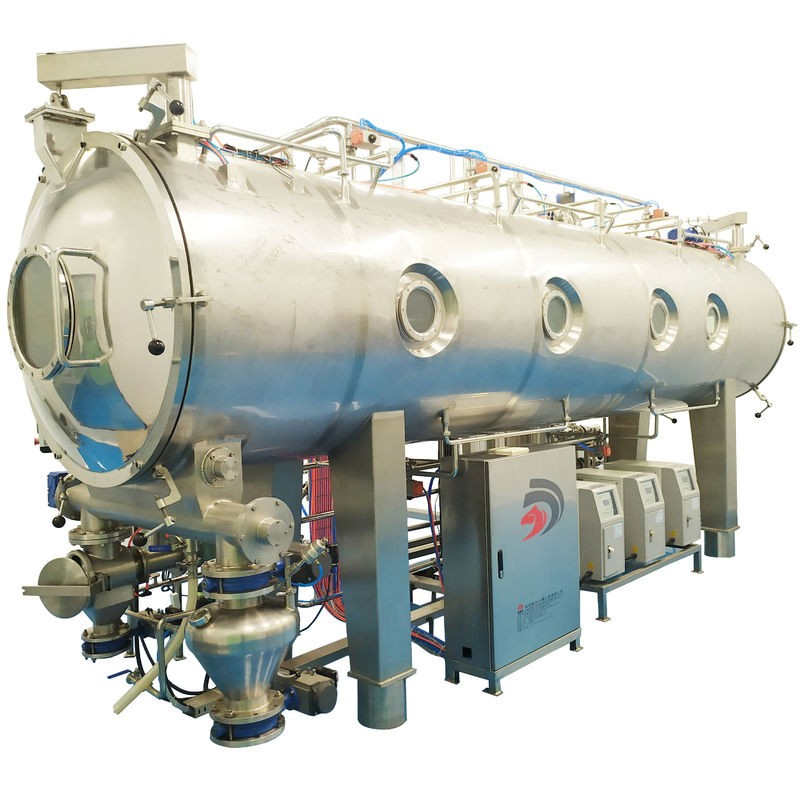
A vacuum belt dryer moves material through a closed chamber with low pressure. The system brings chamber pressure down to about 1–50 mbar. Water then boils at around 10–40°C instead of 100°C. This vacuum low-temperature drying method keeps delicate compounds safe from heat damage. A pump puts the liquid or paste onto a moving conveyor belt. The belt carries the product over heated plates. Heat goes through the belt to the material without touching the heating medium directly. This indirect conduction method gives even warming. The table below shows how each mechanism helps with heat transfer.
Mechanism | How It Works | Role in Heat Transfer |
|---|---|---|
Reduced-pressure evaporation | Chamber pressure drops to roughly 1–50 mbar, so water boils at about 10–40°C | Lets moisture evaporate at low temperature, protecting heat-sensitive compounds |
Indirect conduction heating | Heated plates or thermal fluid sit beneath the belt | Gives gentle, even warming without scorching or dusting |
Multi-zone heating and drying | The belt moves across zones that are controlled separately | Allows a precise thermal profile for steady moisture removal |
This design works well for heat-sensitive materials and high-viscosity pastes. Thick slurries that cannot form droplets in a spray dryer spread evenly on the belt. The vacuum drying chamber handles them without clogging. Processors set the drying temperature and temperature control for each zone. The final moisture requirement often reaches 3% or lower.
Key Advantages and Limits
The vacuum belt dryer gives gentle drying conditions for fragile products. A controlled vacuum environment stops oxidation and keeps bioactivity. Operators get controlled moisture content with a lower drying temperature than hot-air systems. The multi-zone setup applies heat slowly. This step prevents scorching and keeps product quality high.
Batch processing is a key difference from spray drying. Each cycle takes longer because the belt moves at a slow speed. A spray dryer runs nonstop and makes powder in seconds. A vacuum belt dryer may need hours to finish one batch. That slower pace limits throughput for very large plants. Still, the technology works great for high-value products where quality matters more than speed. Manufacturers weigh cycle time against product integrity before choosing this equipment.
Heat-Sensitive Materials: Which Dryer Wins?
Spray Dryer Performance
A spray dryer changes liquid feed into powder in seconds. This short contact time keeps heat exposure low. Processors can change inlet and outlet temperatures to protect delicate compounds. For pharmaceutical products like antibiotics, enzymes, and probiotics, inlet temperatures of 100–180°C and outlet temperatures of 60–90°C help stop deactivation. For very heat-sensitive materials, lower inlet temperatures and exact outlet control stop structural damage. Shinma's High Speed Centrifugal Sprayer Dryer uses advanced centrifugal atomization for gentle, low-temperature processing of extracts and enzymes. This design helps protect active ingredients during spray drying.
Even so, hot air is still the drying medium. Some thermal degradation risk remains for fragile bioactive compounds. Processors must balance throughput against heat exposure. A spray dryer works best when the material can handle brief contact with warm air.
Vacuum Belt Dryer Performance
A vacuum belt dryer takes out moisture under low pressure. Water boils at lower temperatures in this setting. This gentle drying method protects heat-sensitive ingredients from thermal damage. The table below compares key outcomes for bioactive retention.
Feature | Vacuum Belt Drying | Spray Drying |
|---|---|---|
Active ingredient retention | Excellent | Moderate |
Drying temperature | Low (under vacuum) | High-temperature hot air |
Suitability for heat-sensitive extracts | Excellent | Limited |
Product oxidation | Very low | Higher |
Product quality | High | Good |
The vacuum environment holds much less oxygen than normal air systems. Less oxygen exposure lowers oxidative degradation, pigment discoloration, and loss of volatile compounds. This condition supports better ingredient protection and longer shelf life. Bioactive compounds preserved include polyphenols, flavonoids, polysaccharides, natural pigments, essential oils, and antioxidant compounds. Keeping these substances safe maintains the functional value and commercial quality of the finished extract. For heat-sensitive material protection, the vacuum belt dryer gives clear advantages over spray drying when bioactive retention is the top priority.
High-Viscosity Materials: Which Dryer Is Better?
Spray Dryer Limitations
A spray dryer needs liquid feed to break into fine droplets. High-viscosity slurries fight this step. Thick pastes do not turn into mist well. They block nozzles and pile up on chamber walls. Regular spray dryers with pressure nozzles cannot turn high-viscosity feeds into mist. Most need viscosity under 500–800 cP. They also take in only 20–35% solids. Pulse drying systems with three-fluid atomization push viscosity limits up. They reach up to 50% solids. Even so, very thick materials are still hard for spray drying.
Processors who push high-viscosity feed through a spray dryer run into real trouble. Wall buildup wastes product and causes frequent shutdowns. Uneven drying makes powder quality inconsistent. These problems raise operating costs and lower yield. A spray dryer works best with thin liquids, solutions, and low-viscosity suspensions. When a material flows like honey or paste, spray drying becomes inefficient.
Vacuum Belt Dryer Strengths
A vacuum belt dryer handles thick pastes and high-sugar concentrates with ease. A feed pump spreads liquid or paste-like material evenly onto a conveyor belt inside a vacuum drying chamber. Under the belt sit multiple heating zones that are controlled separately, plus a cooling zone. Under vacuum, materials lose moisture fast at low temperature. The dried product is then scraped off and ground into powder at the end of the conveyor.
This design resists clogging. It fits high-sugar, high-viscosity, and high-hygroscopicity materials. Multiple adjustable temperature zones allow exact control at each drying stage. Material can foam under vacuum, which makes the product dissolve better. The controlled vacuum environment also protects heat-sensitive compounds. For high-viscosity material processing, the vacuum belt dryer offers clear advantages over a spray dryer.
For high-viscosity pastes or high-sugar concentrates, a vacuum belt dryer is recommended. For solutions or low-viscosity suspensions, a spray dryer can quickly turn the material into powder. If the liquid material has very high viscosity, direct spraying may cause clogging or material buildup on the chamber walls; a vacuum belt dryer's continuous, temperature-controlled spreading process allows efficient drying while stopping clogging.
The vacuum belt dryer solves continuous drying of heat-sensitive, high-sugar, and high-viscosity materials. It keeps production running without the clogging problems that stop spray drying.
Product Quality Compared
Particle Size and Solubility
Particle size distribution is very important for how a powder works. A spray dryer uses centrifugal atomization to make droplets that are all the same size. These droplets dry into particles with a narrow size range. This narrow range makes solubility and uniformity better. It also helps with steady dissolution rates, better flow, and easy packaging. Products like instant drinks and medicines need this consistency. Shinma's High Speed Centrifugal Sprayer Dryer gives uniform particle size and steady product quality through precise atomization control.
Smaller particles usually dissolve faster. But particles that are too small can make flow worse. You need a balance between particle size and performance. When you need larger particles or better solubility, agglomeration joins small particles into bigger ones. Manufacturers often use this method for milk powder and instant coffee. A vacuum belt dryer makes a dried cake or flakes instead of free-flowing powder. This output may need milling before use, which can make the particle size distribution wider.
Purity and Consistency
Purity and consistency set good drying processes apart from great ones. A spray dryer handles material in a closed system with short heat exposure. This design lowers contamination risk and keeps product integrity. The continuous process keeps output steady over long production runs. Batch-to-batch variation stays low. A vacuum belt dryer also protects purity with its closed vacuum chamber. The low-oxygen environment cuts oxidation and keeps sensitive compounds stable.
The product quality comparison between these two systems depends on the final use. A free-flowing powder with tight particle size control works for direct tableting, blending, or instant mixing. A dried cake from a vacuum belt dryer may fit products where solubility matters less. Both systems can reach high purity when operators control temperature, pressure, and residence time. Material testing on the real feed confirms which system delivers the target quality. Shinma's High Speed Centrifugal Sprayer Dryer supports this testing through its clean laboratory for process verification.
Capacity and Scalability Compared
Throughput and Processing Mode
A spray dryer works without stopping. Material goes in, and powder comes out the whole time. One unit can remove 1,000 to 3,000 kilograms of water or more each hour. That is about 10,000 to 30,000 kilograms of processing capacity per hour. This steady flow fits plants that run all day and night. Operators get a stable output rate and can plan production well.
A vacuum belt dryer works in batches. Each cycle puts material on the belt, dries it under vacuum, and releases the finished product. One batch may take hours to finish. This slower speed limits output for very large plants. Even so, the batch design gives operators close control over every run. A production capacity comparison shows the trade-off clearly. A spray dryer wins on volume. A vacuum belt dryer wins on control and flexibility for smaller, high-value batches.
Scaling from Pilot to Production
Scaling up follows different paths for each system. A spray dryer scales by making the atomizer bigger, enlarging the chamber, and increasing air handling capacity. The continuous process makes it easier to predict output at larger sizes. Shinma supports this growth with large-scale production capability and the largest single-unit processing capacity in China. The company has delivered thousands of spray drying units worldwide, including closed-loop systems.
A vacuum belt dryer scales by adding belt area or running more batches at the same time. This approach fits facilities that grow in steps. Pilot testing on the real feed confirms how each system performs at target throughput. Shinma's clean laboratory lets processors verify their material before committing to full-scale equipment. That step lowers risk and supports a smooth move from pilot to production.
Energy Consumption and Operating Costs
Spray Dryer Energy Use
A spray dryer uses more energy than a vacuum belt dryer. The system pushes large amounts of hot air through the drying chamber. Heating that air and moving it takes a lot of power. Plants that run a spray dryer all day feel this cost every hour. The continuous mode also means the machine almost never stops, so energy use stays steady.
Shinma solves this problem with built-in heat recovery systems. These systems catch waste heat from exhaust air and send it back into the process. PLC controls then adjust temperature and airflow right away. This mix cuts energy use without lowering output. The proof shows that a spray dryer usually pays for itself in 6–12 months. Lower upfront cost and very high output make spray drying a good fit for common powders. Processors who want fast payback and high volume often pick this path.
Vacuum Belt Dryer Energy Use
A vacuum belt dryer uses about one-third the energy of spray drying. The closed-loop heat pump dehumidification design makes this efficiency possible. Instead of heating huge air streams, the system removes moisture under vacuum at low temperature. This method saves power and protects heat-sensitive products at the same time.
The trade-off shows up in the payback period. A vacuum belt dryer usually needs 18–36 months to earn back its higher initial cost. That longer timeline reflects the greater upfront cost of vacuum pumps, belt systems, and control hardware. Even so, the lower operating cost per kilogram of product adds up over years of use. Facilities that process high-value materials accept the longer payback because keeping quality high is worth the expense. The vacuum belt dryer also works with solvent recovery more easily, which cuts cost when regulated or costly solvents are in the feed. For operations where energy efficiency and product integrity matter more than quick payback, this system offers strong long-term value.
Vacuum Belt vs Spray Dryer Comparison: Decision Guide
When a Spray Dryer Is the Better Choice
A spray dryer works well for materials that flow easily. Thin liquids, solutions, and low-viscosity suspensions are the best fit. The feed must break into fine droplets so it can dry properly. Materials with viscosity under 500–800 cP pass through the atomizer without any trouble. A processor who pumps thin slurry into the system gets free-flowing powder in seconds.
Continuous production is a good match for spray drying. One unit removes 1,000 to 3,000 kilograms of water every hour. Plants that run all day and night need this steady output. The machine never stops for batch changes. Operators get consistent results shift after shift.
Free-flowing powder output matters for many industries. Instant drinks, dairy powders, and pharmaceutical tablets all need uniform particles. A spray dryer delivers a narrow particle size distribution. Downstream processing becomes simple when the powder flows well.
Processors should pick a spray dryer when their material meets three conditions. The feed has low viscosity. Production runs continuously at high volume. The final product needs to be free-flowing powder. These criteria point clearly toward spray drying.
When a Vacuum Belt Dryer Is the Better Choice
A vacuum belt dryer suits heat-sensitive materials that lose value at high temperatures. The vacuum chamber lowers pressure to roughly 1–50 mbar. Water boils at 10–40°C in this environment. Bioactive compounds like enzymes, probiotics, and plant extracts stay intact. Gentle drying protects what matters most.
High-viscosity slurries and pastes need this system. Thick materials that clog spray nozzles spread evenly on the belt. The vacuum belt dryer handles honey-like feeds without wall buildup. High-sugar concentrates and hygroscopic products dry without sticking.
Batch processing gives operators close control. Each cycle allows precise temperature adjustments across multiple zones. The slower pace fits high-value products where quality beats speed. A vacuum belt dryer vs spray dryer comparison often ends here. When material sensitivity and viscosity are high, the belt system wins.
Testing Before You Commit
Material testing removes guesswork from equipment selection. Lab trials show how a specific feed behaves in each system. Processors learn the real drying curve, optimal temperature, and achievable moisture content. This step prevents costly mistakes at full scale.
Shinma operates a clean laboratory for process verification. Clients send their material samples for testing. The technical team runs trials on both spray drying and vacuum belt drying equipment. Results guide the final recommendation. This service supports informed decisions before any purchase.
Vendor consultation adds another layer of confidence. Experienced engineers review production goals, facility constraints, and budget limits. They match equipment specifications to actual needs. A vacuum belt vs spray dryer comparison becomes concrete when real data supports it.
Processors should never skip this phase. A small investment in testing saves months of production problems. The right dryer for one material may fail for another. Only trials on the actual feed reveal the truth.
The right machine depends on your material. Heat sensitivity, viscosity, quality needs, production scale, and budget all guide the choice. Thin feeds and high volume point to a spray dryer. Thick pastes and delicate compounds favor a vacuum belt dryer. That one test settles most vacuum belt dryer vs spray dryer debates.
Readers should test their material first. Shinma's clean laboratory checks real feed behavior before you buy. A vacuum belt dryer or spray dryer then earns its place based on data, not guesswork. Smart selection today boosts drying performance for years ahead.
FAQ
Which dryer works best for heat-sensitive extracts and enzymes?
A vacuum belt dryer is the best choice for these materials. It dries under vacuum at low pressure. Inside the vacuum chamber, water boils at 10–40°C. This gentle method keeps bioactive compounds safe. A spray dryer can also work for some sensitive products. It limits heat exposure by using a short contact time.
Can a spray dryer handle thick pastes or high-sugar concentrates?
No. A spray dryer needs low-viscosity feed to form droplets. Thick pastes clog nozzles and build up on chamber walls. Most spray dryers need viscosity under 500–800 cP. A vacuum belt dryer spreads thick material evenly on a moving belt. It handles high-viscosity slurries without clogging.
What particle size and product form does each system produce?
A spray dryer makes free-flowing powder with a narrow particle size range. This uniform output suits instant drinks, dairy powders, and tablets. A vacuum belt dryer produces a dried cake, flakes, or granules. This output may need milling before use. The final product form depends on downstream processing needs.
How do capacity and processing mode differ between the two systems?
A spray dryer runs continuously. One unit removes 1,000 to 3,000 kilograms of water per hour. This steady flow fits large plants running all day. A vacuum belt dryer works in batches. Each cycle takes hours to finish. This slower pace suits high-value products where quality matters more than speed.
Which factors decide between a vacuum belt dryer vs spray dryer?
Material viscosity, heat sensitivity, and production scale guide the choice. Thin liquids and high volume favor a spray dryer. Thick pastes and delicate compounds need a vacuum belt dryer. Testing on the real feed confirms the right system. Shinma's clean laboratory verifies material behavior before purchase.


