What Is a Centrifugal Spray Dryer and How Does It Work?
 Aug 14, 2026|
 View:360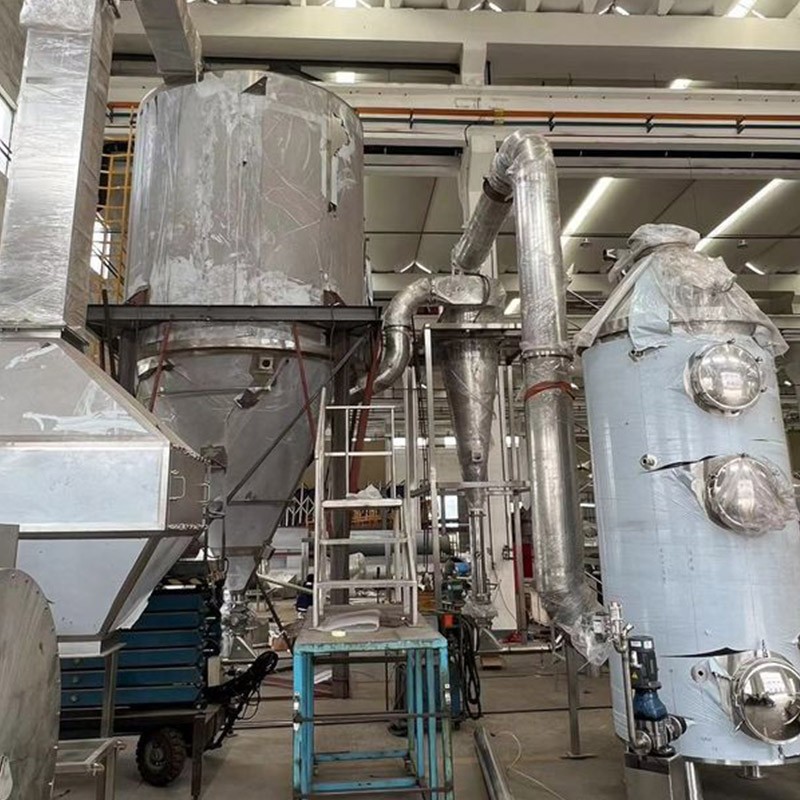
A centrifugal spray dryer is an advanced industrial drying machine that converts liquid materials into fine powder through rapid evaporation. It is widely used in the food, pharmaceutical, chemical, and biotechnology industries because it can produce uniform particles, improve product stability, and handle heat-sensitive materials efficiently.
As a professional centrifugal spray dryer manufacturer, Shinma Drying provides customized spray drying solutions for different production requirements, including milk powder, pharmaceutical ingredients, plant extracts, chemical powders, and other liquid-based products.
Understanding how a centrifugal spray dryer works can help manufacturers choose the right spray drying equipment for their production processes.
Key Takeaways
A centrifugal spray dryer uses a high-speed rotating atomizer to transform liquid feed into fine droplets.
The droplets contact hot air inside the drying chamber, causing rapid moisture evaporation.
The drying process produces powder with controlled particle size and good flowability.
Centrifugal spray dryers are widely applied in food, pharmaceutical, chemical, and industrial production.
Choosing the right spray dryer depends on material properties, capacity requirements, and powder characteristics.
What Is a Centrifugal Spray Dryer?
A centrifugal spray dryer is a type of spray drying machine that uses centrifugal force to atomize liquid materials into tiny droplets. These droplets are then dried by hot air inside a specially designed drying chamber, creating dry powder particles.
Unlike traditional drying methods, spray drying completes evaporation within only a few seconds. This allows manufacturers to process liquid solutions, emulsions, suspensions, and pastes while maintaining product quality.
The main purpose of a centrifugal spray dryer is to:
Convert liquid materials into powder form
Control powder particle size and moisture content
Improve storage stability
Enable continuous industrial production
Because of its flexibility and efficiency, the centrifugal spray dryer has become an important solution in modern industrial drying equipment.
How Does a Centrifugal Spray Dryer Work?
The working principle of a centrifugal spray dryer involves four main stages:
1. Liquid Feed Preparation
Before drying begins, the liquid material is prepared according to production requirements.
The feed material may include:
Milk solution
Pharmaceutical extracts
Chemical solutions
Food ingredients
Biological materials
The prepared liquid is then transported into the spray drying system through a feed pump.
2. Centrifugal Atomization
The most important component of a centrifugal spray dryer is the high-speed rotating atomizer.
When liquid enters the atomizer, centrifugal force breaks the liquid into thousands of small droplets.
The droplet size can be controlled by adjusting:
Atomizer speed
Feed rate
Liquid viscosity
Material concentration
Smaller droplets provide a larger surface area, allowing faster moisture evaporation and better drying performance.
3. Hot Air Drying Process
After atomization, droplets enter the drying chamber and come into contact with hot air.
During this stage:
Hot air transfers heat to liquid droplets.
Moisture evaporates rapidly.
Solid particles form into dry powder.
Powder particles separate from the air stream.
The short drying time helps protect heat-sensitive materials while maintaining product properties.
4. Powder Collection
After drying, the powder is separated from the exhaust air through a cyclone separator, bag filter, or other collection system.
The final powder typically features:
Uniform particle distribution
Good flowability
Low moisture content
Easy storage and transportation
Main Components of a Centrifugal Spray Dryer
A complete centrifugal spray drying system usually includes several key components. Each part plays an important role in controlling drying performance, powder quality, and production stability.
| Component | Function |
|---|---|
| Feed System | Transfers liquid materials into the spray dryer at a controlled flow rate. |
| Centrifugal Atomizer | Uses high-speed rotation to convert liquid feed into fine droplets. |
| Drying Chamber | Provides the environment for heat and mass transfer between hot air and droplets. |
| Hot Air System | Generates and controls the temperature of drying air. |
| Cyclone Separator | Collects dried powder particles from the exhaust air. |
| Control System | Monitors and adjusts operating parameters automatically. |
Advantages of Centrifugal Spray Dryer
1. Fast Drying Speed
A centrifugal spray dryer provides extremely fast drying because liquid materials are atomized into small droplets with a large surface area. This allows rapid moisture evaporation and supports continuous industrial production.
Compared with traditional drying methods, spray drying significantly reduces processing time while maintaining product quality.
2. Excellent Powder Quality
One of the major advantages of a centrifugal spray dryer is its ability to produce consistent powder characteristics.
The drying process allows manufacturers to control:
Particle size distribution
Moisture content
Bulk density
Powder flowability
Solubility performance
These features make centrifugal spray dryers suitable for industries requiring stable and high-quality powder products.
3. Suitable for Heat-Sensitive Materials
Although hot air is used during the drying process, moisture evaporation happens quickly, which helps reduce the exposure time of materials to high temperatures.
Therefore, centrifugal spray dryers are widely used for processing:
Pharmaceutical ingredients
Biological materials
Nutritional products
Plant extracts
4. Continuous Automated Operation
Modern industrial spray dryers can be equipped with advanced automation systems, including PLC control, automatic temperature adjustment, and real-time monitoring.
Automation improves production consistency and reduces manual operation requirements.
Centrifugal Spray Dryer Applications
Food Industry
Centrifugal spray dryers are widely used in food processing applications because they can convert liquid ingredients into stable powder products.
Common applications include:
Milk powder production
Whey powder
Coffee powder
Fruit powder
Flavor ingredients
Pharmaceutical Industry
In pharmaceutical manufacturing, centrifugal spray drying technology helps produce powdered materials with controlled moisture levels and improved stability.
Applications include:
Active pharmaceutical ingredients (API)
Herbal extracts
Drug formulations
Functional powders
Chemical Industry
Chemical manufacturers use centrifugal spray dryers for processing various liquid chemical materials into powder form.
Typical applications include:
Ceramic powders
Pigments
Dyes
Industrial additives
Specialty chemicals
Centrifugal Spray Dryer vs Other Spray Dryers
Different types of spray dryers use different atomization methods and are suitable for different production requirements. Understanding the differences helps manufacturers select the most suitable spray drying equipment.
| Spray Dryer Type | Atomization Method | Suitable Applications |
|---|---|---|
| Centrifugal Spray Dryer | High-speed rotating disc atomization | Food, pharmaceutical, chemical, and large-scale powder production |
| Pressure Spray Dryer | High-pressure nozzle atomization | Applications requiring specific particle size control |
| Two-Fluid Spray Dryer | Compressed air atomization | Laboratory testing and small-scale production |
A centrifugal spray dryer is often preferred for industrial production because it offers stable operation, flexible adjustment, and excellent powder quality control.
How to Choose the Right Centrifugal Spray Dryer?
Selecting the right centrifugal spray dryer requires careful consideration of material characteristics, production requirements, and final powder specifications.
1. Consider Material Characteristics
Different materials have different drying behaviors. Before selecting a spray drying system, manufacturers should evaluate:
Material viscosity
Heat sensitivity
Solid content
Moisture level
Physical and chemical properties
These factors determine the suitable drying temperature, atomization method, and equipment configuration.
2. Evaluate Production Capacity
The capacity of a centrifugal spray dryer should match the required production output.
Important factors include:
Feed processing volume
Powder output requirements
Operating hours
Energy consumption
A professional centrifugal spray dryer manufacturer can design equipment according to specific production conditions.
3. Define Powder Requirements
Different industries require different powder characteristics. Before purchasing spray drying equipment, manufacturers should determine:
Particle size range
Moisture content
Bulk density
Solubility requirements
Powder flowability
The spray dryer design can then be optimized to achieve the desired final product quality.
4. Select an Experienced Manufacturer
Choosing an experienced centrifugal spray dryer manufacturer ensures reliable equipment performance and professional technical support.
A qualified manufacturer should provide:
Customized drying solutions
Engineering design support
Equipment testing
Installation guidance
After-sales service
Why Choose Shinma as Your Centrifugal Spray Dryer Manufacturer?
Shinma Drying specializes in the design and manufacturing of industrial drying equipment, providing customized centrifugal spray dryer solutions for customers worldwide.
With extensive experience in drying technology, Shinma supports industries including food processing, pharmaceuticals, chemicals, and other industrial applications.
Shinma centrifugal spray dryers are designed with attention to:
Stable drying performance
Customized system configuration
Reliable equipment operation
Easy maintenance
Professional technical support
As a trusted spray dryer supplier China, Shinma provides complete solutions from equipment selection and system design to manufacturing and installation.
Frequently Asked Questions About Centrifugal Spray Dryer
1. What is the working principle of a centrifugal spray dryer?
A centrifugal spray dryer uses a high-speed rotating atomizer to transform liquid materials into fine droplets. These droplets enter a hot air stream where moisture evaporates rapidly, leaving behind dry powder particles.
2. What materials can be processed by a centrifugal spray dryer?
Centrifugal spray dryers can process various liquid materials, including food ingredients, pharmaceutical compounds, chemical solutions, plant extracts, dairy products, and other heat-sensitive materials.
3. What is the difference between a centrifugal spray dryer and a pressure spray dryer?
The main difference is the atomization method. A centrifugal spray dryer uses a rotating disc to create droplets, while a pressure spray dryer uses high-pressure nozzles. Centrifugal models are widely used for large-scale production because of their flexibility.
4. How do I choose a centrifugal spray dryer manufacturer?
Choose a manufacturer with professional drying technology experience, customization capability, proven industrial applications, and complete technical support. A reliable supplier should provide solutions based on your material properties and production goals.
5. Can a centrifugal spray dryer be customized?
Yes. Professional manufacturers can customize the drying chamber size, heating system, automation level, material contact parts, and overall configuration according to different production requirements.
Conclusion
A centrifugal spray dryer is an efficient solution for converting liquid materials into high-quality powder products. By using centrifugal atomization technology and rapid hot air drying, it provides excellent control over particle size, moisture content, and powder quality.
For companies searching for a reliable centrifugal spray dryer manufacturer, Shinma Drying provides customized spray drying equipment designed for food, pharmaceutical, chemical, and industrial applications.
With professional engineering capabilities and advanced drying technology, Shinma helps global customers improve production efficiency and achieve consistent powder processing results.