Vacuum Belt Dryer vs Spray Dryer: How to Choose?
 Sep 14, 2026|
 View:5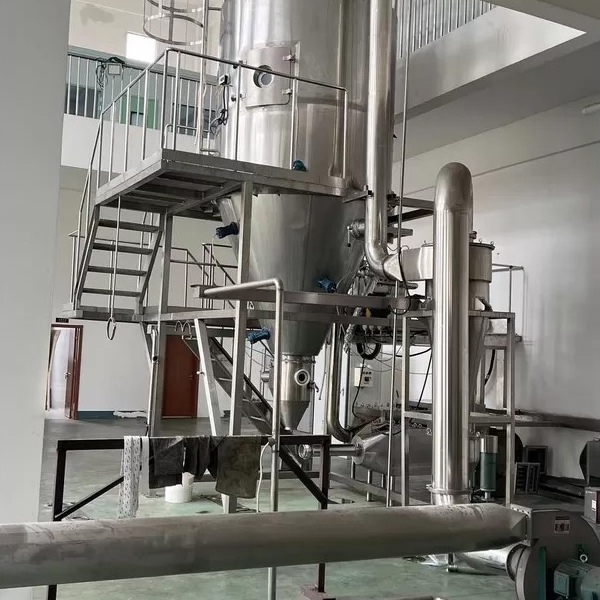
Vacuum Belt vs Spray Dryer Comparison
This table compares key features to help you choose the right dryer.
Features | ||
|---|---|---|
-- | -- | -- |
Working principle | Heated plates under vacuum | Heated air atomization |
Heat sensitivity | Strong protection of actives | Varies by material |
Product form | Needs milling for powder | Direct fine powder |
Capacity | Continuous, high-value products | Very high throughput, commodities |
Initial cost | Higher initial investment | Lower initial investment |
Moisture control | Strong capability | Strong capability |
Solvent recovery | Easier to integrate | More complex |
Energy consumption | About one-third energy use | Higher energy use |
You pick the wrong dryer and you lose money, time, and product quality. Maybe your material burns. Maybe your powder clumps. Maybe your active ingredients break down. These problems cost you real profit.
So which dryer fits your material and your production needs? That question drives Vacuum Belt Dryer vs Spray Dryer: How to Choose? You need a clear answer, not a sales pitch.
This post compares working principles, product quality, capacity, and cost. You will also get simple selection criteria. By the end, you can match the right machine to your process.
Key Takeaways
Vacuum belt dryers gently dry heat-sensitive materials at low temperatures, keeping flavor, color, and nutrients safe.
Spray dryers quickly turn pumpable liquids into powder, which is great for making large amounts of things like milk powder.
Pick a vacuum belt dryer for products that are valuable and easy to damage; pick a spray dryer for making large amounts of regular powder.
Vacuum belt dryers cost more at the start but use less energy and cut down on waste, while spray dryers cost less and pay for themselves sooner.
Before you buy, test your material with a drying expert. This helps you choose the right machine for your needs.
Quick Comparison
Side-by-Side Table
You need a quick way to see how these two machines are different. The table below puts the most important factors side by side. Use it as a starting point for your own review.
Comparison Area | Vacuum Belt Dryer | Spray Dryer |
|---|---|---|
Working principle | Heated plates or thermal medium under vacuum | Heated air system |
Heat sensitivity | Strong protection of active ingredients | Varies by material |
Product form | Needs milling to reach powder form | Strong fine powder capability |
Capacity | Continuous production, suited for high-value products | Very high throughput, suited for commodity production |
Cost | Higher initial investment | Lower initial investment |
Moisture control | Strong capability | Strong capability |
Solvent recovery | Easier to integrate | More complex |
Cleaning complexity | Design-dependent | Generally higher |
This table shows you the pluses and minuses at a glance. See that both technologies handle moisture control well. The real difference shows up in heat sensitivity, product form, and cost.
Key Differences in One Sentence
Spray dryers are great at making large amounts of powder, while vacuum belt dryers are great at gently drying materials that are sensitive. That one sentence sums up the main choice you have.
Spray dryers work best when you need free-flowing powder in high volume. They are good for dairy, food powders, and large-scale ingredients. Vacuum belt dryers protect aroma, color, and flavor. They hold on to heat-sensitive substances that spray dryers may ruin. Vacuum belt dryers also use about one-third of the energy that a typical spray dryer uses.
Your material decides the winner. A pumpable liquid headed for commodity powder points to spray drying. A high-value extract with delicate actives points to vacuum belt drying. This is the heart of Vacuum Belt Dryer vs Spray Dryer: How to Choose?
What Is a Vacuum Belt Dryer?
The Shinma Continuous Vacuum Conveyor Belt Dryer pulls moisture out of heat-sensitive materials while under vacuum. It dries at low temperature and keeps product quality intact. Evaporation capacities go from 450 to 1200 kg/h, which fits large-scale production. The machine runs between 50 and 140°C, with a designed temperature of 90°C. It brings initial moisture from 49-54% down to a final moisture content of ≤3%. Construction uses SUS304 or SUS316 stainless steel. Prices start above $30,000 per set.
Working Principle
Material comes in through the feed port. A slitter, shredder, or paver spreads it evenly onto mesh belts. The machine uses two to three layers of belts for staged drying. Each stage has its own controlled temperature zones. Hot air moves through the belts and material from bottom to top, taking out moisture. The air goes back to a heat pump unit to be dehumidified and reheated. This closed-loop system saves energy.
The drying process has three sections. The constant speed dehydration and speed droop dehydration stages remove up to 80% of water. The final drying stage removes the last 20%. This staged approach gives you even moisture control from 49-54% down to ≤3%.
The vacuum environment gives you several key advantages. It allows low-temperature drying that cuts down thermal degradation and oxidative reactions. The lower oxygen content stops pigment discoloration and loss of volatile compounds. The dryer handles high-viscosity materials well because it spreads concentrated extracts as a thin layer instead of needing atomization. You get uniform residual moisture, good flowability, and less agglomeration. The continuous design supports stable product quality with fewer interruptions.
Typical Applications
Three main industry sectors use vacuum belt dryers. In the food industry, you dry herbs, spices, fruit slices, and dairy ingredients. The gentle process keeps nutritional content, flavor, aroma, and texture. This supports organic and clean-label product standards. In the pharmaceutical industry, you dry active pharmaceutical ingredients, vaccines, and enzymes. The sterile environment meets GMP standards and stops loss of potency during solvent removal. In the chemical industry, you dry specialty chemicals, catalysts, and nanomaterials. The vacuum system allows solvent recovery, particle size control, and supports inert gas atmospheres.
Industry Sector | Typical Applications | Key Benefits |
|---|---|---|
Food & Beverages | Herbs, spices, fruit slices, dairy ingredients | Preserves flavor, aroma, texture; low-temperature drying |
Pharmaceutical & Biotechnology | APIs, vaccines, enzymes, biologics | Sterile processing; GMP compliance; precise moisture control |
Chemical & Materials | Specialty chemicals, catalysts, nanomaterials | Solvent recovery; particle size control; inert gas support |
Each sector gains from the dryer's ability to protect heat-sensitive and oxygen-sensitive materials without compromising final product quality.
What Is a Spray Dryer?

Shinma Spray Dryers turn pumpable liquids into dry powder in one continuous step. The lineup includes high-speed centrifugal, pressure nozzle, and closed-loop models. Each type suits different feed materials and production goals. Unlike a vacuum belt dryer that spreads material on belts, a spray dryer atomizes liquid feed into a heated chamber.
Working Principle
You pump liquid feed into an atomizer. The atomizer breaks the liquid into tiny droplets. This step greatly increases the surface area of the material. Hot air meets the droplets inside a drying chamber. Water evaporates almost instantly. The entire process removes 95–98% of moisture in seconds. Most materials stay in the chamber for only 5–30 seconds. The system typically runs under closed negative-pressure conditions. This design prevents dust leakage and cross-contamination.
The drying speed is fast, and the surface area of the material liquid is greatly increased after being atomized. In the hot air current, 95%–98% of water can be evaporated in an instant, and the drying time is only a few seconds. It is especially suitable for drying heat-sensitive materials.
The short contact time protects thermally sensitive products. You get uniform spherical particles with good flowability and solubility. Precise control of atomization, feed solids, and drying temperatures lets you tune particle size, density, and moisture content.
Typical Applications
Spray dryers handle solutions, suspensions, slurries, emulsions, and pumpable pastes. This broad feed range opens doors across many industries. You can dry skim milk, whey, fruit juices, and egg white in food production. Pharmaceutical applications include active ingredients, heat-sensitive proteins, and inhalable powders. Chemical plants use spray dryers for pigments, catalysts, and ceramics.
Industry | Common Feed Materials |
|---|---|
Food | Skim milk, whole milk, whey, fruit juices, flavors, starches, egg white |
Pharmaceuticals | Active ingredients, excipients, heat-sensitive proteins, inhalable powders |
Chemicals | Pigments, catalysts, ceramics |
The process also supports microencapsulation. You can coat sensitive core materials like oils, flavors, vitamins, and probiotics within protective matrices. This shields them from oxygen, light, and moisture. Closed-loop models recover expensive or regulated solvents using inert gas. Modern designs include explosion protection features for combustible dusts.
Heat Sensitivity
Vacuum Belt Dryer Performance
Your heat-sensitive materials need protection from high heat and oxygen. The vacuum belt dryer offers both. It runs between 50°C and 140°C, with a set temperature of 90°C. This range is far below the point where most sensitive compounds break down. The vacuum pulls oxygen out of the drying chamber. This stops reactions caused by oxygen that damage active ingredients, natural colors, and delicate flavors.
The staged drying process adds another layer of protection. The first two stages take out up to 80% of water at carefully set conditions. The final stage finishes the drying without sudden temperature jumps. Your material never faces the shock of fast heating. Products like herb extracts, fruit concentrates, and pharmaceutical enzymes keep their original traits. You hold on to volatile aroma compounds that hot air streams would blow away. You see no discoloration from oxygen exposure. The gentle process meets strict quality rules for high-value materials.
Spray Dryer Performance
Spray dryers can also process heat-sensitive materials, but the way it works is different. You expose your material to high inlet air temperatures for a very short time. The table below shows the typical ranges.
Dryer Type | Inlet Temperature Range | Residence Time |
|---|---|---|
Conventional spray dryer | 150°C to 230°C | 5 to 30 seconds |
Pulse atomization dryer | 200°C to 425°C | 5 to 30 seconds |
Even though these numbers are high, your material stays in the chamber for just seconds. The fast evaporation creates a cooling effect on each droplet. This cooling from evaporation protects your material from the full heat of the inlet air. You must carefully control the outlet temperature to keep proteins and vitamins safe. You can dry enzymes, proteins, and extracts this way. The short time inside prevents serious damage to most sensitive materials.
But the high inlet temperatures can cause some heat damage. You may lose some volatile flavor compounds. Some color changes can happen depending on your material. How much protection you get depends a lot on your control settings and how well the material handles heat.
The question of Vacuum Belt Dryer vs Spray Dryer: How to Choose? depends on how sensitive your material is. Materials that need the most protection are better with vacuum belt technology. Materials that can handle moderate heat work well with spray drying.
Product Quality
The way you dry your product changes its final quality. Spray dryers and vacuum belt dryers give very different results in particle size, solubility, flavor, color, and purity. Knowing these differences helps you pick the right system for your material.
Particle Size and Solubility
Spray dryers make round particles that are all the same shape. You set the size by changing atomization settings like wheel speed or nozzle pressure. This steady result works well for products that need a standard particle size range. But spray-dried powders have clear problems with solubility. Fast drying can form a hard shell on the outside of particles. This shell slows down how fast they dissolve in liquid. You may need strong mixing or longer stirring to fully reconstitute them.
Vacuum belt dryers use a gentler method. They make particles that are porous and loose. The low-temperature drying under vacuum keeps your material's natural structure. You get better solubility because no hard shell forms. Particles dissolve fast and fully in most liquids. The porous shape also gives your powder a nice look and smooth flow. Your end users see a product that mixes easily without clumps.
Flavor, Color, and Purity
Low-temperature operation inside a vacuum belt dryer protects your product's heat-sensitive compounds. You keep the original flavor, color, and nutrients. Spices hold their full aroma. Fruit powders keep their bright natural color. Active ingredients stay at full strength. The vacuum environment stops oxidation completely. You see no pigment discoloration and no loss of volatile compounds during processing.
Spray drying cannot match this level of protection. High inlet temperatures can cause some heat damage. You may lose subtle flavor notes. You may see slight color changes during the drying cycle. The evidence clearly shows that spray drying has drawbacks in keeping original flavor, solubility, and powder shape compared to vacuum belt drying. For products where natural taste and appearance really matter, the vacuum belt dryer is the better choice.
These differences directly help you answer Vacuum Belt Dryer vs Spray Dryer: How to Choose?. The main question comes down to how much your product's natural qualities matter to your end user and your brand reputation.
Capacity and Footprint
When you plan a production line, capacity and physical footprint decide which dryer fits your facility. You need to know how much material each machine can handle. You also need to know what space and upkeep it requires. The answers differ between spray dryers and vacuum belt dryers.
Throughput and Scalability
Spray dryers are great at making huge amounts of powder. They turn pumpable liquids into free-flowing powder in seconds. The process handles thousands of kilograms per hour for dairy, food ingredients, and industrial chemicals. This makes spray drying the top choice for high volume at lower cost per kilogram. You can scale production by using larger chambers or multiple units.
Vacuum belt dryers can also reach large scale. The Shinma Continuous Vacuum Conveyor Belt Dryer handles 450 to 1200 kg/h evaporation capacity. This puts it in the same league for sensitive materials. You get high throughput plus the protection of low-temperature vacuum drying. Your heat-sensitive products dry at speed without losing quality. You do not need to sacrifice yield for gentleness.
Scalability works for both technologies. You can start with a smaller unit and expand as demand grows. The right choice depends on your material's sensitivity and your target volume.
Space and Maintenance
Spray dryers need tall drying towers and long ducting. The system includes air heaters, cyclones, bag filters, and exhaust handling. You need a lot of vertical clearance in your building. The total footprint includes the tower, piping, and collection equipment.
Vacuum belt dryers use a flat conveyor layout. The equipment spreads across floor space rather than rising upward. This fits into buildings with lower ceilings. The staged belt design uses the floor area well for continuous drying.
Maintenance differences matter for your ongoing costs. Spray dryers have many moving parts: high-speed atomizers, fans, pumps, and rotary valves. Each part needs regular inspection and replacement. This raises your maintenance budget and requires skilled technicians.
Vacuum belt dryers have fewer rotating components. The belts, heating system, and vacuum pump need periodic attention. However, physical cleaning between product runs takes more time. You must clean belts, chamber walls, and conveyors to prevent cross-contamination when switching materials. This factor matters if you run multiple products on the same line.
These capacity and maintenance factors help you answer Vacuum Belt Dryer vs Spray Dryer: How to Choose? for your specific production targets.
Cost Comparison
Initial Investment
Spray dryers are cheaper to buy at first. This makes them a good choice for many projects. A spray dryer with standard parts fits smaller budgets. You pay less for the main chamber, atomizer, and air handling system. Small and medium businesses often begin with spray dryers.
Vacuum belt dryers need a bigger upfront payment. The vacuum system, heat pump unit, and stainless steel build raise the price. The Shinma Continuous Vacuum Conveyor Belt Dryer starts at $30,000 per set. This price shows the advanced engineering and materials used. The vacuum belt dryer market report says these systems cost much more than other dryers. This high starting cost can scare off small businesses. Malt Products Corporation spent over $15 million on a new drying plant with a vacuum belt dryer. They picked it over a spray dryer to make free-flowing particles while keeping flavor, smell, and color.
Cost Item | Spray Drying | Vacuum Spray Drying |
|---|---|---|
Initial investment | Higher | High |
Operating costs | Medium | High |
Post-maintenance | Medium | High |
Payback period (months) | 6–12 | 18–36 |
The payback period tells an important story. Spray dryers pay for themselves in 6 to 12 months. Vacuum belt dryers take 18 to 36 months. For drug and fine chemical work, this longer time comes with higher value and profit potential.
Operating Costs
Energy use sets these two systems apart over time. Spray dryers push large amounts of hot air through tall chambers. This process uses a lot of energy. Vacuum belt dryers use heat pump dehumidification. This closed-loop system reheats and recycles air. You save energy with every production run.
Maintenance needs also differ. Spray dryers have more moving parts. Atomizers, fans, pumps, and rotary valves all need regular care. Each part adds to your long-term costs. Vacuum belt dryers have fewer rotating parts. Belts, heating elements, and vacuum pumps need periodic checks. This simpler design lowers your maintenance budget.
Yield matters for your bottom line. Vacuum belt dryers protect heat-sensitive materials from loss. You keep more of your product at full quality. Higher yield makes up for the larger upfront cost. The choice in Vacuum Belt Dryer vs Spray Dryer: How to Choose? depends on your production volume, material value, and quality goals.
Vacuum Belt Dryer vs Spray Dryer: How to Choose
You have seen how these two machines differ in principle, heat handling, quality, capacity, and cost. Now you need a clear decision. The right choice comes down to your material, your product form, and your budget. Use the criteria below to match the technology to your process.
Choose a Vacuum Belt Dryer If...
Your material is heat-sensitive, oxygen-sensitive, or high-value. The vacuum belt dryer protects active ingredients, natural color, and volatile flavor compounds. It handles medium and high viscosity materials that resist atomization. You can feed liquids, pastes, concentrates, and even solid pieces onto the belt. This flexibility sets it apart from spray drying.
Your product quality, flavor, and purity are critical. The low-temperature vacuum environment stops oxidation and preserves the original properties of your material. Pharmaceutical extracts, herbal medicine ingredients, cosmetic active ingredients, and specialty chemicals all benefit from this gentle treatment. You also get easier solvent recovery integration, which matters when you work with regulated or expensive solvents.
You need even drying and continuous operation. The staged belt design delivers uniform residual moisture from 49-54% down to ≤3%. The Shinma Continuous Vacuum Conveyor Belt Dryer reaches 450 to 1200 kg/h, so you get large-scale output without sacrificing gentleness. Choose this dryer when your material cannot survive high heat and your brand depends on natural taste and appearance.
Choose a Spray Dryer If...
Your feed is a pumpable liquid, slurry, emulsion, or solution. Spray dryers need good atomization performance, so low-viscosity feeds work best. You pump the liquid into an atomizer, and hot air dries the droplets in seconds. This process removes 95–98% of moisture almost instantly.
Your final product must be a free-flowing powder. Spray drying gives you fine powder directly, with uniform spherical particles and controlled particle size. You avoid the secondary milling step that belt drying requires. Milk powder, food ingredients, and standard powder products are classic fits. You also get better direct control over particle size, which matters for instant coffee, dairy blends, and inhalable powders.
Large-scale production and lower initial investment are your priorities. Spray dryers cost less upfront and pay for themselves in 6 to 12 months. They handle medium to very large scale with high efficiency. If your material tolerates moderate heat and your volume is high, spray drying gives you the best cost per kilogram.
One practical factor separates the two in multi-product plants. Feed changeover is faster with spray dryers. Belt dryers require physical cleaning between runs to prevent cross-contamination. If you switch products often, weigh that cleaning time against the quality gains. The answer to Vacuum Belt Dryer vs Spray Dryer: How to Choose? depends on your material, your powder specs, and your budget. Match those three factors, and you will pick the right machine.
Your choice depends on four things: how sensitive your material is, what powder qualities you need, how much you produce, and your budget. If your material is heat-sensitive and must keep its flavor, a vacuum belt dryer is the answer. It dries gently at 50–140°C and brings moisture down to ≤3%. If you have a pumpable liquid and want free-flowing powder in large amounts, a spray dryer fits better. Both machines handle 450–1200 kg/h, so size alone rarely makes the decision.
No single machine is best for every job. The right pick depends on your process, your quality goals, and your numbers. Before you spend money, test your material first. A drying expert can run trials with your own product. This shows which technology protects your yield. Ask for that test early. It costs much less than installing the wrong machine.
FAQ
Which dryer works better for heat-sensitive materials?
A vacuum belt dryer is better. It dries at 50–140°C under vacuum. This low heat keeps active ingredients, color, and flavor safe. A spray dryer uses hot air for a few seconds. It can handle some sensitive materials, but you might see small heat damage.
Can a vacuum belt dryer make powder directly?
No. It makes a dried cake or sheet. You must mill it to get powder. A spray dryer makes free-flowing powder in one step. Pick spray drying if you need powder straight from the dryer.
Which machine costs less to buy?
A spray dryer costs less to buy first. A vacuum belt dryer starts at $30,000 per set. Spray dryers cover their cost in 6–12 months. Vacuum belt dryers take 18–36 months. Your material value and quality goals decide which one is worth it.
Which dryer handles higher production volume?
Both can handle large amounts. A spray dryer handles very high volume for commodity powders. The Shinma vacuum belt dryer reaches 450–1200 kg/h. That works for large-scale production of sensitive materials. Your material type decides the capacity you need.
Which dryer is easier to switch between products?
A spray dryer switches faster. You just flush the feed line and atomizer. A vacuum belt dryer needs physical cleaning of belts and chamber walls between runs. If you switch products often, think about cleaning time versus quality gains.