


Understanding the Working Principle of Spin Flash Dryers
 Aug 26, 2026|
 View:2957
You face a tough problem: a wet, sticky filter cake that blocks normal drying machines. A spin flash dryer fixes this issue. It mixes mechanical breaking apart with hot air drying in one steady step. The XSG Series from Shinma shows this technology well.
Knowing how the spin flash dryer works helps you see if it fits your materials. This article explains the main parts and compares spin flash dryers to regular flash dryers. You will learn how they handle sticky pastes that fail with usual methods.
These systems save energy by letting gas touch materials directly. They use less power than spray dryers that rely on atomization. You can handle materials from 10 kg/h up to 3000 kg/h of evaporation capacity. The outcome: steady powder with controlled moisture, ready to dry even heat-sensitive items.
Key Takeaways
A spin flash dryer uses a machine that breaks up sticky clumps, so it can dry materials that would clog regular flash dryers.
The short residence time of only seconds protects heat-sensitive products from heat damage during drying.
Pilot testing with your actual filter cake shows how well it works and stops you from making expensive buying mistakes.
The combination of mechanical breaking and hot air contact dries things quickly in one continuous step.
Defining Spin Flash Dryers and Their Purpose
A spin flash dryer mixes mechanical breaking with fast drying in one steady system. This machine splits wet feed while hot air takes away moisture at the same time. You get a fine, dry powder in one trip through the equipment.
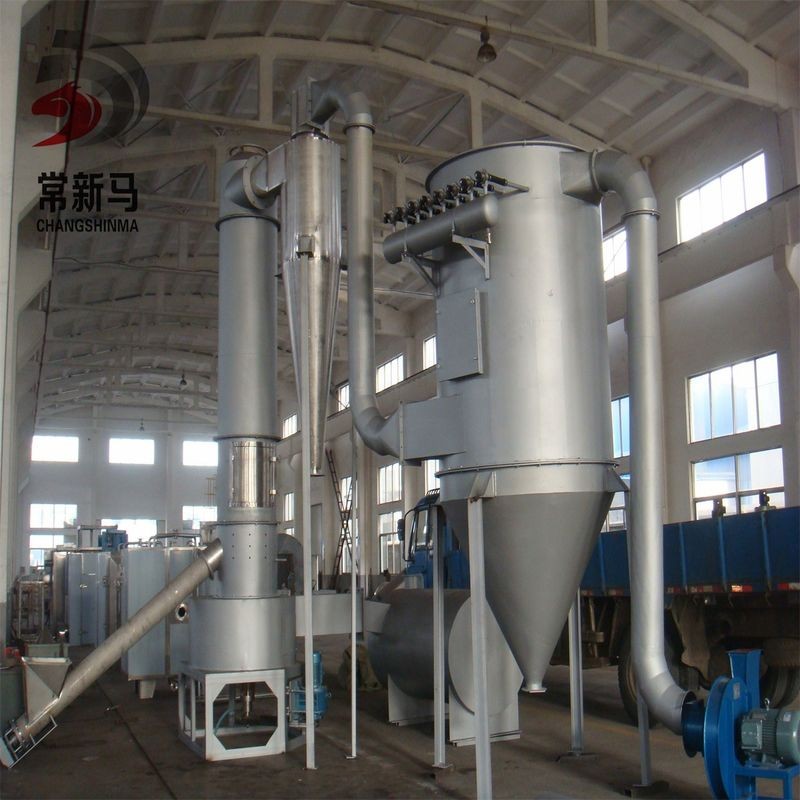
The Challenge of Sticky and Pasty Materials
Regular flash dryers use only fast-moving air to break up material. That way fails with sticky filter cakes. When you pull a wet cake from a filter press, particles hold together with liquid bridges stronger than the air's shear force. This causes clogging, dead zones, and wall sticking inside the drying chamber.
You see these issues in many fields. Dyestuff makers handle sticky cakes that block equipment. Pigment producers deal with fine, dusty wet pastes. Agrochemical plants process cake-like materials that won't flow. Drug companies face heat-sensitive active ingredients that break down with long exposure. In every case, the material's stickiness beats air-only spreading methods.
Wall sticking creates another problem. When inlet air temperature goes above the material's glass transition point, surfaces melt and stick to chamber walls. Poor nozzle spraying makes this worse by making large droplets. You end up with product buildup, lower efficiency, and frequent stops for cleaning.
How Spin Flash Dryers Solve the Dispersion Problem
The spin flash dryer fixes this with a mechanical breaker. You can pick a cage mill or pin mill type, based on your material's lump strength and behavior. This fast-spinning agitator hits the wet feed, breaking lumps into smaller pieces. The result: much more surface area for hot air contact.
Hot air enters from the side, creating a strong swirl inside the vertical chamber. The broken particles spin upward, showing maximum surface to the heated gas. Moisture evaporates fast. A sorting ring at the top lets only small, dry particles pass. Bigger, still-wet pieces bounce back into the drying zone for another round.
The main benefit is the mechanical breaker. Unlike air-only drying that depends just on airflow to break material, the spin flash dryer uses a fast-spinning agitator to physically smash lumps and spread the material evenly. This mechanical action makes sure the wet feed is quickly broken into smaller, workable pieces, creating a much larger surface for hot air contact. Air-only methods lack this mechanical breaking, leading to bigger clumps and less surface, causing poorer spreading and slower drying.
This combined method means you can process filter cakes, pastes, and thick sludges straight from a filter press. The short stay time protects heat-sensitive products from heat damage. You get better heat efficiency and make steady dry powder in one continuous step.
The Spin Flash Dryer Working Principle
Understanding the spin flash dryer working principle helps you see why this machine handles sticky materials so well. The process moves wet cake from feed to dry powder in a continuous, controlled sequence. Each stage plays a specific role in achieving fast moisture removal and consistent product quality.
Step-by-Step Process from Feed to Discharge
You start with controlled feeding. A screw feeder introduces wet cake, paste, or sludge into the drying chamber at a steady rate. This prevents choking and uneven drying. For sticky materials, a variable speed screw with a lump-breaking arrangement stops bridging.
Controlled Feeding: The feed rate must be stable. A variable speed screw feeder and lump-breaking mechanism prevent bridging for sticky materials. This ensures a steady supply without choking or uneven drying.
Mechanical Disintegration: The rotating disintegrator, either a cage mill or pin mill type, breaks wet lumps into smaller fragments. This step dramatically increases the surface area exposed to hot air. Without this mechanical action, the material would remain in large clumps that dry unevenly.
Hot Air Contact: After disintegration, hot air from a direct or indirect fired system contacts the dispersed particles. Temperature, airflow, feed rate, and residence time must work together. Poor dispersion cannot be fixed by higher heat alone.
Moisture Evaporation: Drying occurs rapidly while particles stay suspended in the hot air stream during pneumatic movement. This short residence time takes only seconds. It protects heat-sensitive products from thermal degradation.
Separation: The dried powder travels with the air stream to a cyclone separator and bag filter. The cyclone collects the main powder fraction. The bag filter captures finer particles from the exhaust air.
Discharge: The final dry powder exits through a rotary air lock valve. This valve releases the product while reducing air leakage. It maintains system pressure balance and conveying velocity.
The Critical Role of the Disintegrator Mechanism
The disintegrator mechanism is the core of the spin flash dryer working principle. Unlike flash dryers that rely only on air velocity to break up material, this machine uses mechanical force directly. This distinction sets spin flash dryers apart from standard flash dryers in the industry. The disintegrator also separates this design from other flash dryers that cannot handle sticky pastes.
The rotor vigorously agitates and breaks down wet lumps into fine particles. This action dramatically increases surface area. It continuously exposes fresh wet surfaces to hot air, leading to rapid moisture evaporation. The intense swirling and upward motion suspends particles in the hot air stream, creating a turbulent fluidized-bed environment. This ensures intimate contact between particles and the drying medium.
The rotor also ensures homogeneous distribution throughout the chamber. Mechanical agitation combined with pneumatic conveying prevents localized overheating or under-drying. You get consistent product quality batch after batch.
The continuous mechanical action means particles are progressively reduced in size while drying. As broken lumps start to dry, they break apart further with the flow of hot air. The aerated powder particles rise to the top where classifiers separate them by size. Larger particles return for further disintegration and drying. Fine particles exit with the air stream for collection.
This high thermal efficiency comes from intimate contact between finely dispersed material and high-velocity hot air. The combination of mechanical disintegration and instant flash evaporation leads to exceptionally high heat and mass transfer rates. You get low specific energy consumption and uniform product quality.
The short residence time makes this drying process ideal for heat-sensitive materials. The material stays inside the chamber for only seconds, minimizing heat exposure. However, you still need careful control of temperature and other conditions to ensure product quality.
Key Components of a Spin Flash Dryer
The spin flash dryer uses three main parts that work together. The feed system, the drying chamber, and the classifier each have a key job in the process. Knowing these parts helps you see how the machine handles sticky materials so well.
Feed System, Drying Chamber, and Classifier
You start with the feed system. It has a feed vat with an agitator. This agitator evens out and breaks up any uneven product flow. It smooths out lumps before the material enters the main system. A variable speed screw feeder then moves the material into the chamber. This setup stops bridging and gives steady feeding of sticky materials. The variable speed drive lets you control the feed rate exactly. This stops overloading and unstable temperature in the chamber. The lump breaker also cuts big lumps before they reach the disintegrator zone. This keeps material moving and stops any settling or clogging. You get a steady, controlled flow into the drying chamber.
The drying chamber is the main vessel. Here, the product meets the hot air stream for drying and powdering. A special rotor sits inside the chamber. This rotor acts as a scraper and disintegrator. It breaks lumps into small pieces. Hot air comes in from the side. This makes a spinning action inside the chamber. The air dries and further breaks up the material at the same time. Bigger particles stay in the air flow here for more processing. The maker builds these parts from SUS304 or SUS316L stainless steel. These materials give strong rust resistance and long life. You can also pick other options as needed for your work.
The classifier sits at the top of the drying chamber. It works as a particle size gate. The classifier is a ring-shaped baffle. As material moves through it, centrifugal force pushes particles to spin upward in different paths. Smaller particles leave through the center hole. They go to the collection system. Bigger particles stay in the chamber for more crushing and drying. This cycle repeats until each particle reaches the right size. You can adjust the classifier speed as a process setting. This lets you control the final particle size of the end product. The result is a steady dry powder that meets your needs.
Advanced Features in Shinma's XSG Series
The XSG Series Spin Flash Dryer from Shinma has several advanced features. These features boost performance and protect your product during processing.
A bottom cooling device stops material damage. The bottom of the dryer is a high-temperature zone. Without cooling, heat-sensitive materials can break down here. The cooling device keeps this area safe for your product. This feature is very useful for drug and chemical uses.
The bearing system uses air-sealed bearings. This means a special air sealing device keeps the bearings safe from dust and moisture. A cooling mechanism also supports them. Together, these features greatly extend the life of the moving parts. You get longer service intervals and lower repair costs.
The turbojet plate improves air distribution. This special air distributing device cuts down equipment resistance. It also makes sure air speed stays steady inside the drying tower. The result is better drying performance and steady product quality.
A classification ring and turbojet plate let you control the final product precisely. You can adjust product fineness and final moisture content easily. This gives you flexibility to meet different product needs.
The high air speed around the tower shortens material stay time. This stops wall sticking. It also protects heat-sensitive materials from heat damage. Your product stays in the chamber for only seconds. This makes the XSG Series great for materials that cannot handle long heat exposure.
These features make the XSG Series a reliable choice for processing sticky and heat-sensitive materials. You get a steady dry powder quality with each batch. The mix of mechanical action and precise control makes sure efficient and reliable operation.
Spin Flash Dryer vs. Standard Flash Dryers
When you compare drying technologies, the main difference is how each machine breaks apart wet material. This difference decides which equipment works best for your product. Knowing this comparison helps you avoid costly mistakes when picking equipment.
Comparing Mechanisms: Mechanical vs. Pneumatic Dispersion
Standard flash dryers use pneumatic dispersion. Fast-moving air enters the drying tube and carries material upward. The air's shear force breaks apart loose clumps as they move through the system. This method works well for free-flowing powders that already separate easily. The air stream does all the work without any mechanical help.
Spin flash dryers use a different method. They combine pneumatic conveying with mechanical force from a rotating disintegrator. The spinning blades physically smash wet lumps into smaller pieces. This mechanical action creates much more surface area than air velocity alone can achieve. The spin flash dryer working principle depends on this dual-action approach.
The practical result matters more than the theoretical difference. Air-only systems struggle when particles stick together with liquid bridges. The mechanical disintegrator breaks those bridges instantly. You get consistent dispersion even with challenging feed materials. This mechanism also prevents wall buildup that plagues standard flash dryers.
Advantages and Limitations for Different Materials
Flash dryers handle damp, crumble, and friable materials effectively. These materials break apart easily when air pushes against them. You can process many crystalline products, powders, and granular materials without mechanical assistance. The equipment stays simple and requires less maintenance.
Spin flash dryers extend your capabilities to difficult materials. Filter cakes from press filters, thick pastes, and high-viscosity sludges all become processable. The mechanical disintegrator handles materials that would clog a standard flash dryer within minutes. You also gain better control over final moisture and particle size through the classifier ring adjustment.
Heat-sensitive materials benefit from both technologies. High inlet temperatures up to 700°C work safely because the short exposure time keeps the material at wet bulb temperature until surface moisture removal completes. The material never reaches the full air temperature during its brief residence. This protects sensitive products from thermal degradation.
The evidence does not cover limitations for abrasive products. You should test abrasive materials carefully before committing to either technology. The mechanical disintegrator in spin flash dryers may experience wear with highly abrasive feeds. Standard flash dryers avoid this concern since they lack moving parts in the drying zone. Your material's specific characteristics should guide your final choice.
Selecting the Right Dryer: Data and Pilot Testing
Choosing a spin flash dryer takes more than a fast look at your material. You need exact details about your feed before any vendor can size the equipment right. Without this info, you might buy a system that fails on day one.
Essential Process Data for Feasibility
Start by collecting the main traits of your wet material. You must know the starting moisture level and the target final moisture. You also need the bulk density, lump size, and stickiness level. These factors decide the feeding system and the disintegrator design.
| Category | Parameter | Design Consideration |
|---|---|---|
| Material Properties | Moisture Content | Starting and target final moisture levels must be set |
| Material Properties | Thermal Sensitivity | Sets the highest safe drying temperature |
| Material Properties | Particle Size and Distribution | Affects drying speed and needed airflow |
| Drying Air Properties | Temperature | Higher values speed drying but may cause heat damage |
| Drying Air Properties | Velocity | Must be enough to keep particles floating without breaking them |
You also need to know if your material is abrasive or corrosive. Abrasive feeds wear down the disintegrator blades faster. Corrosive materials need special contact surfaces like SUS316L stainless steel. Your available heat source also matters. Steam, natural gas, or electricity each change the hot air generator design.
The Value of Pilot Testing with Your Material
Pilot testing gives you answers that no datasheet can offer. You run your actual filter cake through a small-scale unit. You watch how the feed enters the screw. You check for bridging or choking. You see whether the material breaks under the disintegrator action or smears and melts instead.
Pilot testing helps when the buyer needs to confirm powder behavior, moisture target, atomization method, or scale-up assumptions before full-scale purchase.
The trial shows the achievable outlet moisture and product quality. You see the powder separation efficiency and the dust load on the bag filter. You spot heat sensitivity issues and any cleaning problems after the run. These results let engineers adjust inlet temperature, rotor speed, and feed rate to match your material's real behavior.
Shinma offers a clean laboratory for process verification and optimization. You can test your specific material on a small scale before committing to a full-scale unit. For example, the XSG-8 model handles 240 kg/h of moisture evaporation. This scale gives you realistic data for scale-up decisions.
In some cases, a spin flash dryer, flash dryer, fluid bed dryer, evaporator, or ATFD may be more suitable. That decision should come from feed testing and process economics, not from preference.
The table below shows how different materials require unique setups. Each application demands custom feed systems, temperature strategies, and auxiliary parts. A standard dryer cannot handle all these cases without testing.
| Application | Material | Initial Moisture | Final Moisture | Key Customization |
|---|---|---|---|---|
| Alumina Slurry Drying | Alumina slurry | 80% | 0.2% | Rotary valve feed, abrasion-resistant liners, slurry pump and mixer |
| Agricultural Chemical Drying | Heat-sensitive product | 10% | 0.2% | Closed-loop nitrogen recycling with steam coil heat exchanger |
| Drying & Calcining of Iron Oxide | Yellow iron oxide wet cake | 40% | 10% bound moisture | Two-stage system for drying and calcination |
| Silicate Drying | Silicate filter cake | 40% | 10% bound moisture | Separate hot air manifold at 1200°F, volumetric screw feeder |
The drying process works only when you match the equipment to your feed. Pilot testing prevents costly selection mistakes. You get a dry powder that meets your exact specs. You avoid the cost of rework and downtime. Ask any vendor: "Do you have a pilot plant for testing my specific filter cake?" and "Can you provide references for similar applications?" These questions separate experienced suppliers from those who guess.
The spin flash dryer's main idea is one key part: a mechanical disintegrator that breaks sticky cakes into small pieces. This ability lets you dry materials that standard flash dryers cannot dry. You get fast drying with a short time inside, which keeps heat-sensitive products safe.
Knowing this idea helps you pick the right dryer. You skip costly errors by matching the dryer to your material. You get steady dry powder with the right moisture.
Before you buy, ask sellers two key questions. These questions tell good suppliers from those who guess.
"Do you have a pilot plant for testing my specific filter cake?" and "Can you provide references for similar applications?"
These answers show the equipment will work for your special drying needs.
FAQ
What materials work best in a spin flash dryer?
You can use a spin flash dryer for sticky filter cakes, pastes, and sludges. It works well on materials that clog normal flash dryers. The mechanical disintegrator breaks lumps into small pieces for fast moisture removal.
How does the short residence time protect heat-sensitive products?
The short time inside the chamber lasts only seconds. This stops heat damage during drying. Your sensitive products never get to the full air temperature, so they stay safe.
Can I process abrasive materials with a spin flash dryer?
You can process abrasive materials, but test them carefully. The mechanical disintegrator may wear down. Pick abrasion-resistant materials for parts that touch the product. The drying process still works well with the right setup.
What is the typical residence time inside the chamber?
The time inside the chamber is very short, usually just a few seconds. This fast cycle stops wall sticking and keeps heat-sensitive materials safe. You get quick moisture removal without heat damage.


Recommended Products

XSG Series Spin Flash Dryer Chemical Fbd Fluid Bed Dryer

ZLPG Spray Dryer For Chinese Traditional Medicine Extract

XLP Series Closed Loop Spray Dryer

Spray Dryer Machine Chemical Drying Equipment

High Pressure Pump Spray Dryer Machine

Max Speed 18000r/min Centrifugal Spray Dryer Machine

LPG High Speed Centrifugal Spray Dryer Equipment


Recent News
1.Shinma's Fluidized Bed Granulator: Advancing Small-Molecule Peptide Granulation
2025-08-132.How does a vacuum belt dryer work?
2025-07-313.Spray Drying Instant Coffee: A Business Owner’s Guide to Efficiency and Profitability
2025-07-184.What equipment is used in spray drying?
2025-08-295.Understanding the Working Principle of Spin Flash Dryers
2026-08-26

